

When your dog or cat is vomiting, has diarrhea, stops eating, or seems unusually tired, contact Animal Hospital at Lakewood Ranch in Bradenton. Our veterinary team evaluates sick pets, recommends testing when needed, and discusses treatment and next steps.
We offer same-day appointments and urgent care during business hours, and we accept drop-offs. If your pet needs to be seen before the next available appointment, we'll triage your pet's condition and fit you in between scheduled appointments. Our receptionists can tell you about how long you may have to wait.
Not sure how soon your pet needs to be seen? Call us. Our team will ask about your pet's symptoms and help you decide on the right next step.
Signs of a pet emergency
Get emergency care now if your pet has trouble breathing, collapses or can't stand, has a seizure, has pale, white, or blue gums, has a swollen or hard belly with retching, is straining to urinate with little or nothing coming out, has been hit by a car, is bleeding heavily, or may have eaten something toxic.
During business hours, call (941) 751-0101 so our team can confirm availability for the fastest possible care. After hours, our recommended emergency hospitals are Veterinary Medical Center at Lakewood Ranch, (941) 739-1800, 15205 Garnet Trail, Bradenton, and Animal ER of University Park, (941) 355-2884, 8237 Cooper Creek Blvd, Bradenton.
When should I take my sick pet to the vet?
The urgency depends on your pet’s age, medical history, symptoms, and how quickly they are changing. Call for guidance if you are unsure. Do not wait for a listed time threshold when symptoms are severe or worsening.
| Symptom | Contact us promptly if… | Get emergency care if… |
|---|---|---|
| Vomiting | It happens more than once or twice, keeps coming back, or comes with less appetite or energy | It won't stop, has blood, comes with a swollen belly, or your pet may have swallowed an object or toxin |
| Diarrhea | It lasts more than a day or two, has blood or looks black, or your pet also seems tired or isn't eating | It is bloody or black and your pet is weak, or it's a young puppy or kitten |
| Not eating | A dog skips more than a meal or two, or a cat stops eating or eats much less than usual | Your pet also has vomiting, weakness, or a swollen belly |
| Lethargy | Your pet is less active than usual and it's new, worsening, or comes with other symptoms | Your pet is very weak, can't stand, or collapses |
| Limping | It lasts more than a day or two, keeps coming back, or seems painful | The leg looks broken, your pet won't put any weight on it, or it followed a fall or car accident |
| Coughing or sneezing | It lasts more than a few days, or your pet has eye or nose discharge | Your pet is struggling to breathe, breathing with an open mouth (cats), or the gums look pale, or slightly blue |
| Urination changes | Your pet is drinking or urinating more, having accidents, or there's blood in the urine. If there is a change in the urine stream. | Your pet is straining with little or no urine, especially male cats or dogs. |
Dog diarrhea: when to see a vet
Diarrhea in dogs is common and can come from eating something unusual, a sudden food change, stress, parasites, infections, or other illnesses. A single soft stool in an otherwise healthy adult dog often passes on its own. Book a visit if diarrhea lasts more than a day or two, keeps coming back, or comes with vomiting, a poor appetite, or tiredness. Puppies, senior dogs, and dogs with health conditions can get dehydrated faster and should be seen sooner. Bring a stool sample if you can when seeking care.
Bloody or black, tarry stool should be checked by a veterinarian the same day. Get emergency care if your dog is very weak, collapses, or has severe, ongoing vomiting and diarrhea.
Dog and cat vomiting: when is it serious?
An occasional vomit in an otherwise healthy, active pet isn't always a concern. Cats may also bring up hairballs now and then. Vomiting is more serious when it happens several times in a day, keeps coming back, or comes with diarrhea, a poor appetite, or tiredness.
Vomiting can be an emergency if your pet may have swallowed an object, a toy, or something toxic, if there is blood in the vomit, or if your dog is retching without bringing anything up and has a swollen belly, which can be a sign of bloat. A photograph of the vomit can sometimes be helpful to your vet.
Why is my dog or cat not eating?
A lost appetite can come from an upset stomach, dental pain, stress, fever, infection, or illnesses such as kidney disease. A dog who skips one meal but acts normal can often be watched.
Contact your veterinarian promptly if your cat stops eating or eats much less than usual. Do not wait a full day if your cat is also vomiting, weak, or in pain, or has an existing medical condition. Going without food can cause serious complications in cats, including a liver condition called hepatic lipidosis. Your veterinarian can advise how urgently your cat needs to be seen.
Lethargic dog or cat: what it can mean
A lethargic dog or cat is unusually tired, slow to get up, or not interested in play, walks, or food. It can follow a busy day, but it can also be a sign of pain, fever, infection, heart disease, or other illnesses. Book a visit if lethargy lasts more than a day or comes with other signs. Get emergency care if your pet is very weak, can't stand, or has pale gums.
Why is my dog limping?
Limping can come from a cut or something stuck in a paw, an overgrown nail, a strain or sprain, a torn ligament, cancerous tumors, or arthritis. First check your pet’s paw for anything stuck in there. Book a visit if your dog is limping for more than a day or two or the limp keeps coming back. Our Animal Hospital at Lakewood Ranch team may recommend X-rays or other diagnostic testing to find the cause. Ongoing stiffness or limping in older pets can be a sign of arthritis and joint pain. Bring a video of the limp if you have one.
What happens at a sick pet visit?
- Your pet's history: We ask what you've noticed, when it started, and any changes in eating, drinking, energy, or bathroom habits.
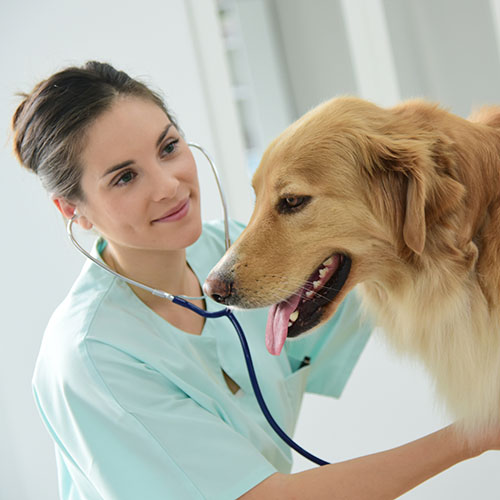
- Physical exam: Your veterinarian checks your pet from nose to tail, including temperature, hydration, heart, lungs, and belly.
- Diagnostic testing if needed: Depending on the symptoms, your veterinarian may recommend bloodwork, a urine or stool test, X-rays, or ultrasound. Our hospital has an in-house laboratory, digital X-ray, and ultrasound, so many results don't require a trip elsewhere. Learn more about diagnostic testing.
- Treatment plan: We explain what we found, what we recommend, and how to care for your pet at home. Medications can be dispensed from our in-house pharmacy, and refills are available later through our online pharmacy.
- Follow-up: We'll tell you what to watch for and when to check back in.
What to bring to a sick visit
- A list of symptoms and when they started.
- The name of your pet's food and any recent diet changes or treats.
- A list of current medications and supplements.
- A photo or video of the symptom, if it comes and goes.
- A fresh stool or vomit sample in a sealed bag, if it's easy to collect.
- The packaging, if your pet may have eaten something toxic.
- A carrier for cats. Our hospital policy requires all cats to arrive in a carrier.
Sick exotic pets
We also care for exotic pets, including rodents, reptiles, and other pocket pets, and Dr. Madison Wilson brings considerable experience with exotic animals. Call us right away if your exotic pet shows any of these signs, since it may be an emergency:
- Decreased appetite
- Changes in behavior
- Diarrhea or persistent abnormal droppings
- No droppings
- Coughing or sneezing
- Abnormal breathing
- Weight loss
- Vomiting
- Weakness
We currently don't see wildlife or livestock. Learn more about exotic animal care.
Why choose Animal Hospital at Lakewood Ranch when your pet is sick?
When your pet is sick, you want clear answers and a plan. We take the time to examine your pet carefully, explain what we find, and help you understand your options. Between sick visits, a yearly wellness exam helps catch problems early.
- A thorough examination to assess your pet and guide the next steps.
- An explanation of recommended tests, what they may show, and their estimated costs.
- A clear treatment plan and home-care instructions.
- Guidance on what to watch for and when to call back.
- Referral to emergency or specialty care when needed.
- Same-day appointments and urgent care during business hours, including Wednesday evenings until 7 PM and Saturday mornings.
- An in-house laboratory, digital X-ray, ultrasound, and pharmacy.
- Payment options including cash, check, all major credit cards, and CareCredit and Scratchpay financing.
- A veterinary team led by Medical Director Dr. Kristen Henry, with Dr. Madison Wilson and Dr. Patricia Kyle.
What pet owners say
"They take such good care of my cat! They keep me updated whenever he has to stay longer than expected, and they're just all around a wonderful crew of people!" — Kaitlynn E.
Animal Hospital at Lakewood Ranch is proud to serve dogs, cats, and their families in Lakewood Ranch, Bradenton, and throughout Manatee County.
Sick pet FAQs
Get emergency care right away for trouble breathing, collapse, seizures, pale or blue gums, a swollen belly with retching, straining to urinate with little or no urine, heavy bleeding, or a possible poisoning. For other symptoms, call your veterinarian. The team can help you decide how soon your pet should be seen. During business hours, call us at (941) 751-0101. After hours, we recommend Veterinary Medical Center at Lakewood Ranch, (941) 739-1800, or Animal ER of University Park, (941) 355-2884.
Yes. We offer same-day appointments and urgent care during business hours: Monday, Tuesday, Thursday, and Friday from 8 AM to 5:30 PM, Wednesday from 8 AM to 7 PM, and Saturday from 8 AM to 12 PM. Call (941) 751-0101 so we can check availability. If your pet needs to be seen before an available appointment, we'll triage your pet and fit you in between scheduled appointments.
Dog diarrhea is an emergency if it is bloody or black and your dog is weak, if it comes with repeated vomiting, or if a young puppy has diarrhea and vomiting. Bloody or black stool in a dog who otherwise seems well should still be checked the same day, and diarrhea that lasts more than a day or two should be checked by a veterinarian.
Not long. Call your veterinarian promptly if your cat stops eating or eats much less than usual, and do not wait a full day if your cat is also vomiting, weak, or in pain, or has an existing medical condition. Going without food can lead to a serious liver condition called hepatic lipidosis.
Common causes include eating something unusual, a sudden diet change, swallowed objects, infections, parasites, and illnesses such as pancreatitis or kidney disease. Call your veterinarian if vomiting happens more than once or twice, keeps coming back, or comes with other signs. If you saw them swallow something unusual – call about coming in immediately.
Only if your veterinarian tells you to. Some human medicines can be unsafe for certain pets or can hide a more serious problem. Pepto-Bismol should never be given to cats.
Call your veterinarian or an emergency hospital right away, even if your pet seems fine. You can also call the ASPCA Animal Poison Control Center at (888) 426-4435 (a fee may apply). Bring the packaging with you if you can. Do not induce vomiting unless a veterinary professional tells you to. The Pet Poison Helpline is also available at (855) 764-7661.
Lethargy means your dog is unusually tired or uninterested in normal activities. It can be a sign of pain, fever, infection, or other illness. If it lasts more than a day or comes with other symptoms, book a visit. If your dog is very weak or collapses, get emergency care.
Cost depends on the exam and any tests or treatment your pet needs. Before running tests, our team explains what we recommend and the estimated cost. Call Animal Hospital at Lakewood Ranch at (941) 751-0101 for current exam fees. We accept cash, check, and all major credit cards, and offer CareCredit and Scratchpay financing.